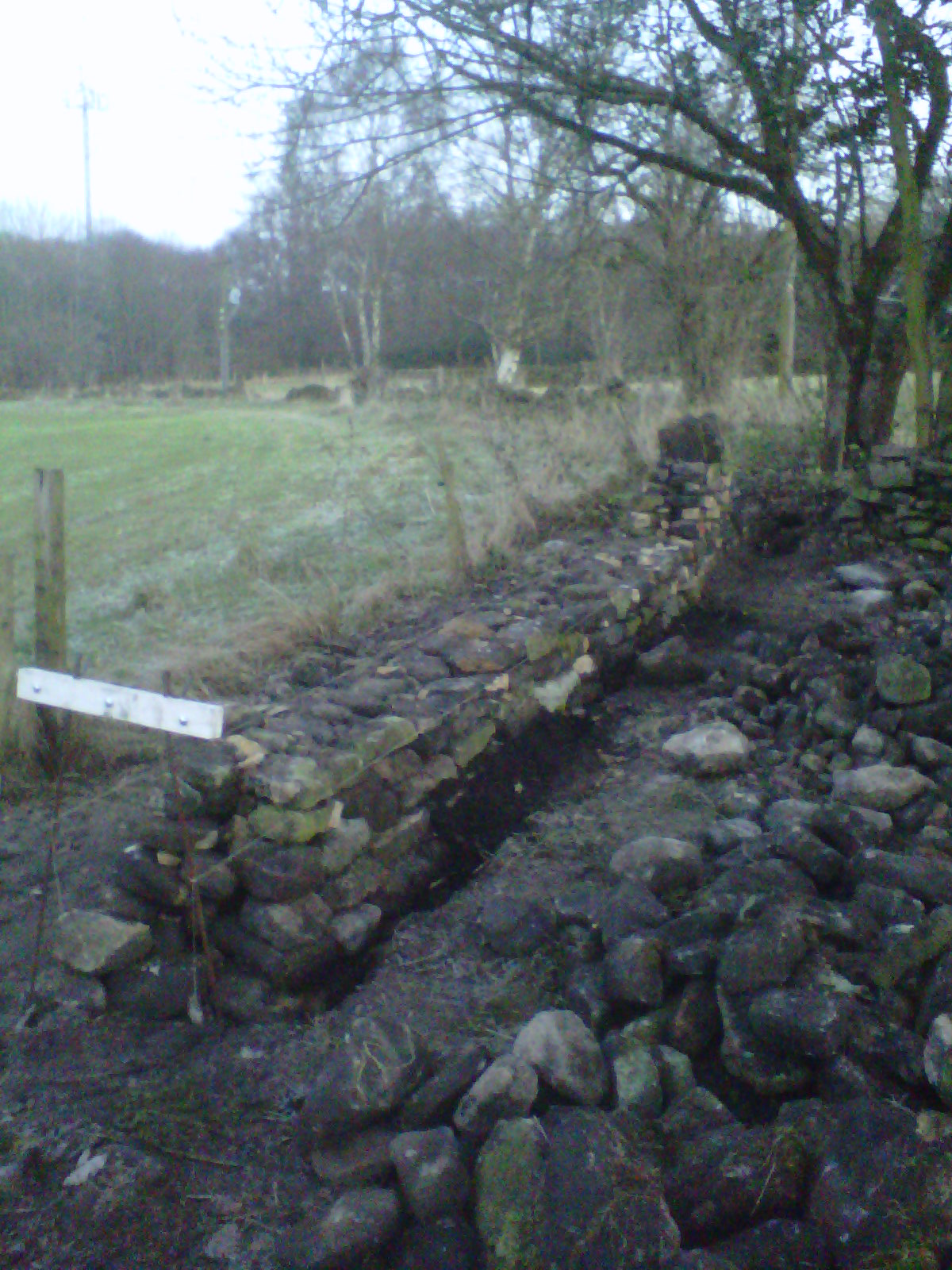
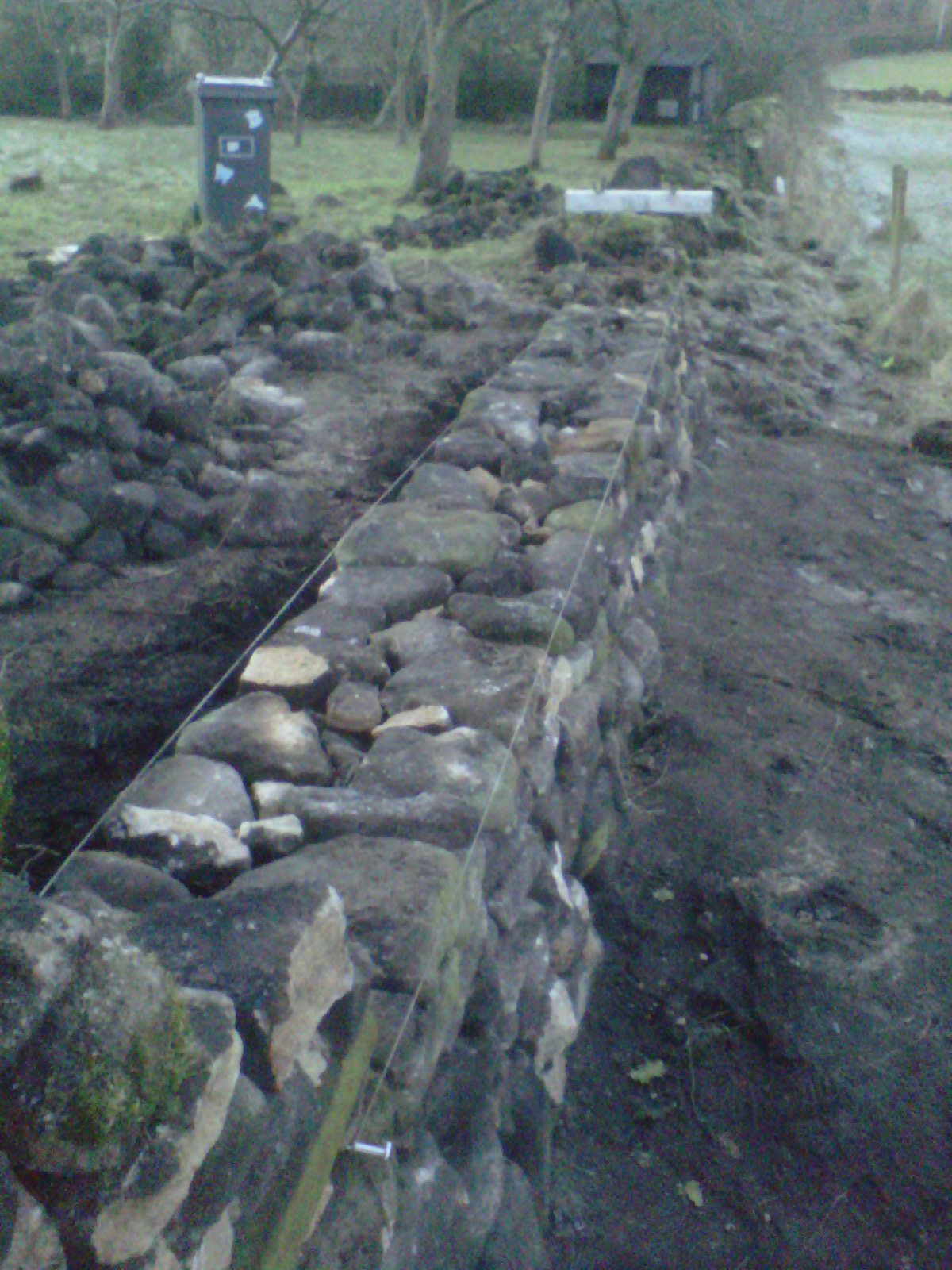
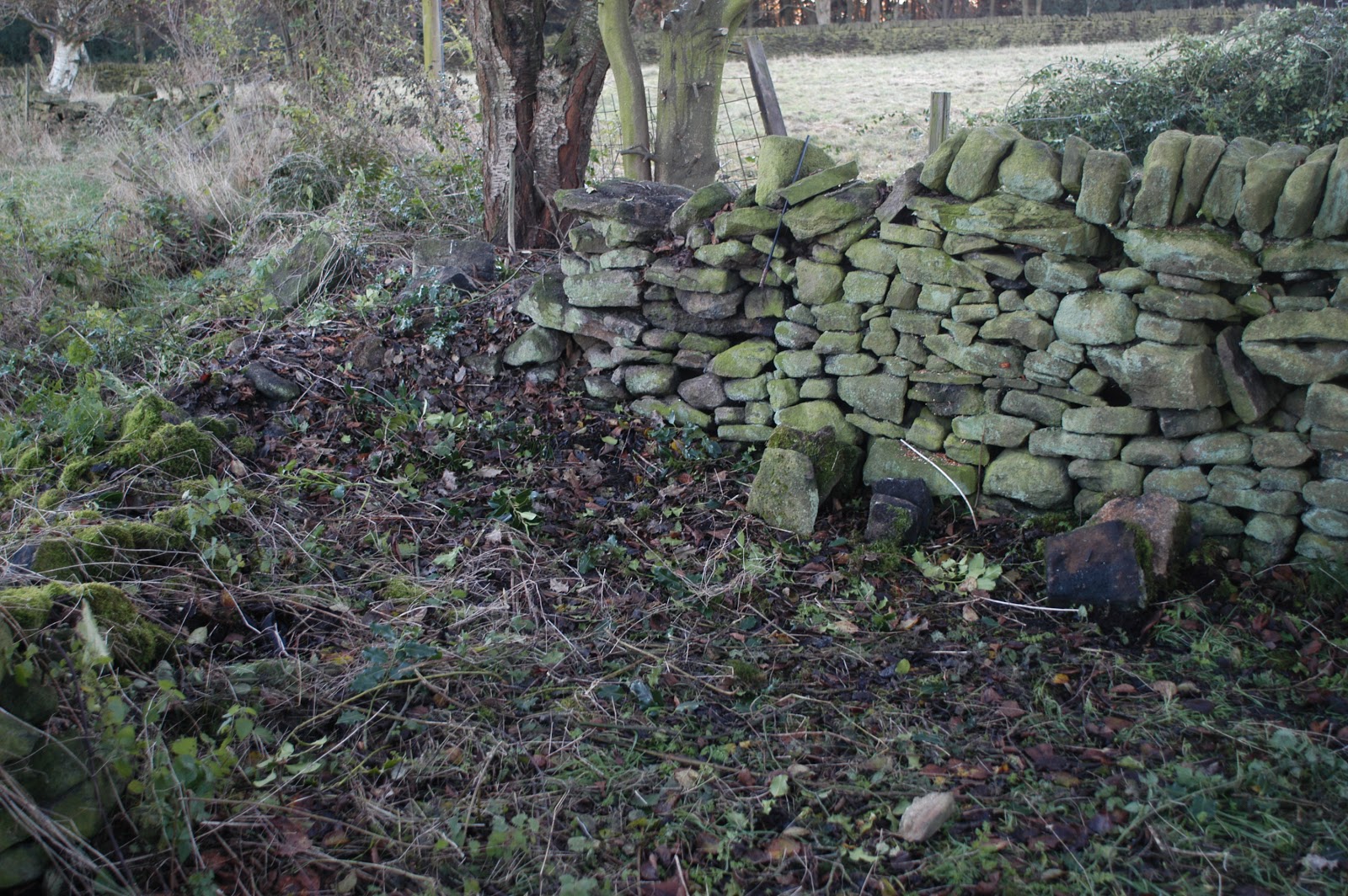
Yes, you guessed it! More dry stone walling. The weather forecast was for a good day and we weren’t disappointed. Cold and dry. Problem was that it never got above freezing. The ground was solid, but the foundations had already been dug, so I wasn’t too worried. What I hadn’t planned for was the fact that all the stones had been frozen together. I gave it a few hours and even a bit of sun on the stones didn’t make much of a difference. Anyway, another 3-4 courses done today and I think another couple of days and we will be putting the coping stones on this section.
Tag: dry stone walling (Page 3 of 3)
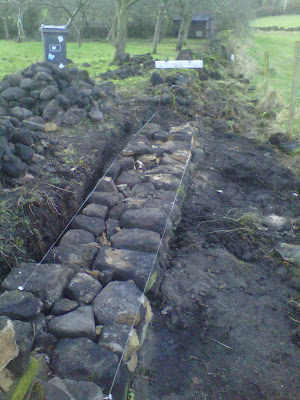
Same location as the previous day’s dry stone walling. Today is cold – just above freezing – the water in the buckets from last weekend have an inch of ice in them. I only turned in a couple of hours as it was just too cold. These first few courses are the most difficult – they tend to have the biggest stones in them which take quite a bit of placing and fitting.
![]() |
| Day 10 – almost at ground level! |
It rained and it rained. I put on some foul weather gear. But after about 30 minutes I had to admit defeat – the area around the base of the wall had turned to a quagmire – I was slipping and sliding all over the place. When carrying large stones this seemed like a recipe for disaster. Time for a new plan.
I swapped to stripping out the next section of wall, but after a while I had to give up on this too. The last resort was pruning the apple trees in the orchard. These haven’t been pruned in years and are probably well passed being saved, however, it is worth a shot. I have attempted to thin out the canopy on each of the trees – particularly were a number of the branches had grown in on themselves. Hopefully, this should bring some more light to the inner parts of the tree. I also removed any branches that were growing downwards or were damaged.
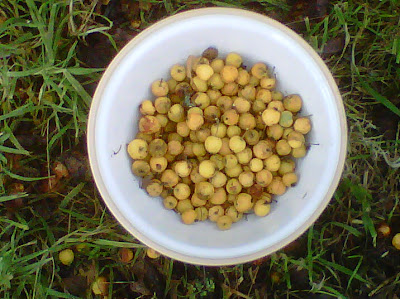
There is a crab apple tree amongst the fruit trees. Jo made some crab apple jelly a few weeks ago and we decided to collect some more for crab apple vodka – like sloe gin, but with crab apples and vodka. Sounds a bit more interesting than jelly, but we will see.
![]() |
| Crab apples – these appear to be a yellow variety, other varieties are red |
The rain stopped, briefly, in the afternoon and I returned to the dry stone walling. With such a long section, progress looks slow. The first couple of courses are hard work since many of the larger stones go into the base of the wall. It can be a bit disheartening.
![]() |
| Day 9 – Mud everywhere! |
Back in the orchard again today. The top photograph shows the part of the wall that I built last weekend – probably only a metre or so. Today, I turned my attention to building this wall out. Rather than just concentrating on one small section, I have dug out the foundations for the next 4 metre section. It took about 3 hours to dismantle the existing wall and dig the foundations. It took another hour to lay the foundation stones.
All in all, a good day.
By concentrating on digging out the foundations, this will help speed up the building of the wall and also gets the foundations dug before the winter frost sets in and the ground freezes (making it difficult, if not impossible, to dig the foundations).
![]() |
| Last week’s wall in the background and the new foundations |
![]() |
| Looking in the opposite direction showing the newly dismantled wall and new foundations |
![]() |
| Now with the foundation stones |
![]() |
| Day 7 – Foundations dug |
![]() |
| Another metre of wall |
![]() |
| Day 7 – today’s efforts |
Day six and time for a new location. Having had some success with my initial attempts at dry stone walling, I have now turned to a location that is a lot more visible and will be seen by visitors to the house. At least I know it will look half decent when finished!
The wall being rebuilt is the one to the left of the top photograph. It is in pretty poor shape and has collapsed into the adjoining field. The first job is to strip out all the existing stones and dig new foundations. The fields are at slightly different levels – the adjoining field is around 18 inches lower than on my side. There is a wire fence on the other side of the wall, but there is a 3 feet between the wall and the fence making it possible to work on that side without having to take the fence down.
Once the stones are removed, I have stacked them according to their size. I put coping stones (the ones that go on top of the wall) to one side, then stack the others with the face of the stone facing upwards. Smaller stones next to the coping stones and then the larger ones stacked closer to the wall – this means that I don’t have to carry the bigger stones as far. By stacking the stones with their faces up, it means that selecting stones when rebuilding the wall becomes that much quicker.
| Just starting to dismantle the wall on the left (yes, it is there under that mound) |
| The stacks of stones starting to grow – the coping stones are stacked furthest away from the wall as they go on last. |