Author: admin (Page 4 of 6)

VAT questions

So having read the material on VAT rules, I have a number of questions.  Fortunately, we know a VAT professional and will get some advice (and hopefully) some answers.  I’ll post them here once I have them.  In the meantime, here are the questions:
  1. Given that we are converting two cottages into one, I assume that we are eligible for the reduced rate of VAT (currently 5%).  Is this correct?
  2. We are converting the barn on the end of the property into residential use.  This attracts a VAT rate of 0%.  Is this correct?
  3. When converting the barn, it will be extended.  What rate of VAT applies to this element of the build?
  4. The proposal is to build a triple garage with home office space above.  What level of VAT will this attract?
  5. If different parts of the build (even if completed at the same time), attract different levels of VAT how is this handled?
  6. If we qualify for the reduced rate of VAT, we have to prove this to our build who will then only charge us at the reduced rate.  What form of evidence will satisfy HM revenues and custom?
  7. Certain energy saving technology has a VAT rate of 0%.  How is this handled when dealt with via the main contractor?

Update: You will find the answers here.

VAT on house renovations in the UK

One thing is for sure – VAT is complicated. And VAT on building renovations is one of the more complicated topics.

Two other things we can be sure about: firstly, I am not a tax accountant so make sure you get proper advice (there are a number of specialists around who can help you with this); and secondly, trying to correct the situation after the wrong amount of VAT has been charged, seems to be very difficult.  So it would be wise to get it right from the start.

The standard rate for VAT (or Value Added Tax) in the UK is 20%, so this can add a considerable amount to your renovation.  So it is well worth investing some time in this subject.  Not matter how boring it may seem!

There are exceptions to the standard rate where either a zero rate of VAT is due or a reduced rate (currently 5%).  But this all depends on the time of renovation that you are undertaking.

You can find more information (a lot more information) on the HM Revenue & Customs site here: http://www.hmrc.gov.uk/vat/sectors/builders/construction.htm.  Once you start looking into the material you will find that the definitive source is “VAT Notice 708: Buildings and Construction”.  But before you get to carried and download it, you should note that it is 120 pages long!

Fortunately, there are some more understandable, and slightly shorter, texts available.  You certainly might still need to dip into the official documentation for reference, but this is not where I would start.  There is a great article in this month’s (Oct 2012) “Homebuilding and Renovation” magazine.  You can access a version of the text online here: http://www.homebuilding.co.uk/advice/existing-homes/renovating/vat

Zero rated VAT
Building a new house attracts 0% VAT.  The VAT is paid on goods and labour as the house is built and then a SINGLE claim is submitted to the Revenue and Customs to reclaim the VAT.

Converting a non-residential building into a dwelling also attracts VAT at 0%.

Reduced rate VAT (5%)
There are a number of categories of construction/renovation that attract a reduced rate of VAT.

  • Renovating or altering an empty house or flat (assuming that it has been unoccupied for ten years or more);
  • Converting a house into flats;
  • Converting a residential building into a different residential units – for example combining two cottages into a single house.

The method of reclaiming the VAT here seems to be different – you provide evidence to the builder that you are eligible for the reduced rate of VAT and then you get charged (for labour and goods) at this reduced rate.  Thus there is no VAT to be reclaimed at the end of the project.  This sounds like a better approach, however, many builders do not seem to be aware of the rules and once the VAT is paid, it is very difficult to get it back.

There are exceptions to these rules, and it is not possible to get a reduced rate of VAT on everything (for example, architects fees attract the standard rate of VAT), so it would be wise to fully understand the rules before you embark on your project.

We had some questions when we looked into the details and the questions are here.
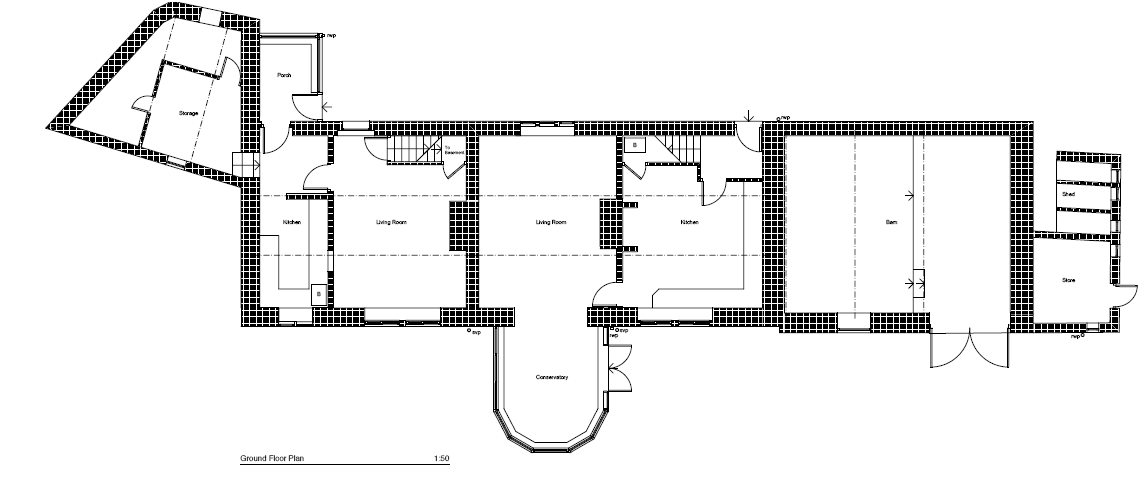
Existing floor plans

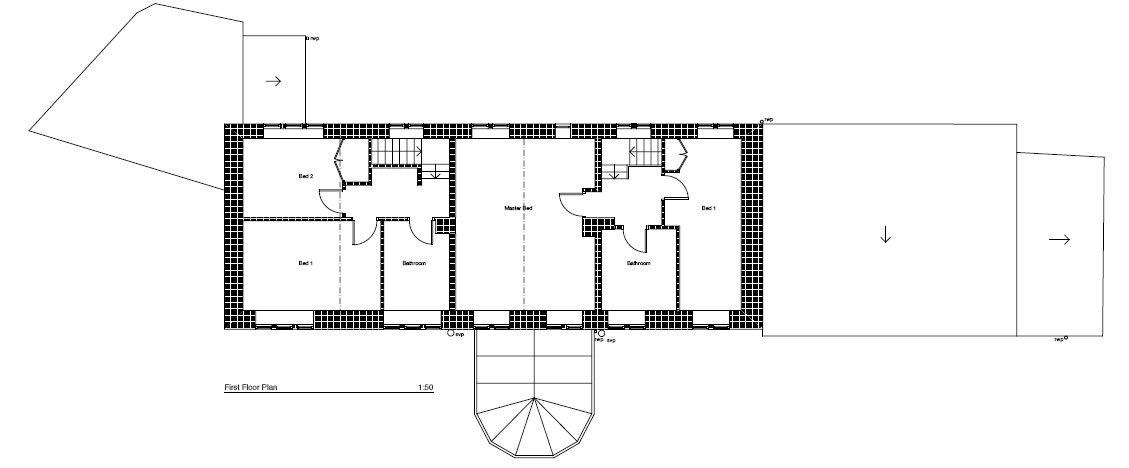
Since we bought the property before any estate agents details were produced, these are the first floor plans of the property that we have seen.  We have been working off some of the rough sketches that I did using Google Maps as a source for the overall size and shape of the property.


Ground floor floorplan
Ground Floor

You can see quite clearly the outline of the three original cottages with the middle one being smaller than the two adjoining.  Interestingly, this fact is also borne out by the census records that show that the middle property consisted of just two rooms – one up and one down.  These days it is difficult to imagine bringing up a family in such a property.


First floor floorplan
First Floor

I didn’t want to publish any of this information until we had exchanged – it seemed to be tempting fate otherwise.

We have exchanged contracts!

Back in June, I wrote that the journey had begun.  Yesterday, we passed one of the first milestones and exchanged contracts.  At the end of the week, we will complete and the property will belong to us.  Then the first destination on our journey will have been reached.

I have often heard it said that you can buy a house in less than a couple of months.  In my experience, that is pretty unusual – a minimum of three months seems much more likely.  From first seeing the property in June to completing on it in early September isn’t bad going.  But it is difficult to believe that three months has already elapsed.

One thing that I hadn’t banked on was the additional time that it takes to purchase a property of the summer.  Vendors and solicitors going on holiday (not together, by the way) and a long turn around time on local authority searches all added to the timescale.  But we got there in the end.  Thankfully.

What happens next? Well, the architect is briefed and we are expecting some sketches at the end of September.  Once these are agreed, this will be worked up into a full set of plans for planning submission.  That’s probably going to take another 4-6 weeks.

Topographic survey

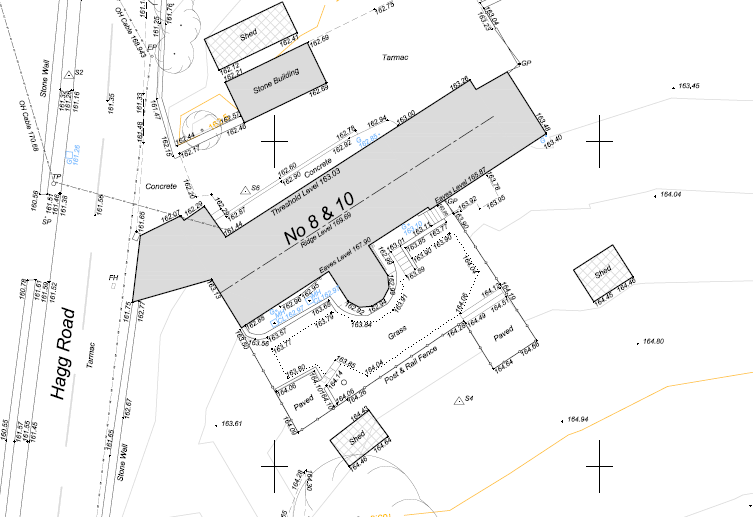
We had a completed topographic survey of the property and the surrounding land completed last month.  The work was completed by Ben at VisionGeomatics.  More on their website here: www.visiongeomatics.com.


Topographic Survey
Excerpt from the topographic survey


You can download the entire survey as a PDF here.  This allows you to turn the layers on and off on the survey plan. There is an incredible amount of data on the topographic survey including contours, outbuildings, trees, drains, overhead power lines and walls.

The survey data includes all the land as well as an outline of the buildings.  A separate internal survey was completed to work out the floorplan for the buildings. You will find the floorplans here. These floor plans were then placed onto the topographic survey to provide a complete picture of the buildings and site.  This should be a great starting point for the new designs.

The farm today (drawings)

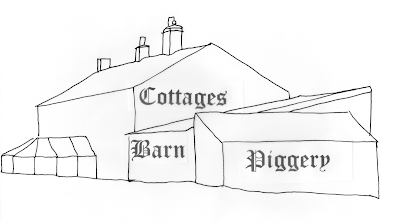
Here’s a couple of drawings of the farmhouse as it is today.  The second drawing shows the property in less detail, but labels up the different parts that go to make up the building.  You will find photos of the property here.

The cottages were originally three cottages (8, 9 and 10 Hagg Leys).  It was only in the 1990s that numbers 9 and 10 were converted into one property – known as 10 Hagg Leys today.  We plan to join all three cottages together and connect it to the barn.


Drawing of the existing properties
Drawing of the property today


The barn is a simple construction with a sloping corrugated roof.  There are two floor levels inside the barn.  The lower floor level is probably at about the same level as floor level inside the cottages themselves. The current plan is that the barn will form the corner of an extension that will be at a right angle to the existing cottages.  Thus forming an “L” shape.


Outline drawing of the existing properties
The different parts that make up the property


Attached to the barn is another building with a lean-to roof.  This time the roof is made up of stone tiles.  It is believed that this building was used to prepared food for animals.  For want of a better label, I have called this the “piggery” since we believe that the food prepared here was destined for pigs. This building is likely to be demolished as part of the renovation and wherever possible the materials reused elsewhere on the site.

How accurate is measuring using Google Maps?

Well, now I have an accurate set of floor plans, I can compare the estimates that I worked out using Google Maps (see previous post).

I estimated the overall size of the buildings (including the barn) to be around 20 feet by 80 feet.  The floor plans (and the topo survey) show that the building is in fact 22 feet by 82 feet.  Remarkably close to the Google Map estimate.  I tried a few other measurements that I had taken and they are all within about 10% of the actual measurement – this is particularly the case with longer measurements.  It is pretty scary about how much detail you can glean from these satellite images.

Dry stone walling course

I attended an intro course in dry stone walling at the weekend run by the Yorkshire Dry Stone Walling Academy. http://ydswa.com/.  It was held at a farm on the way to Barnsley and was about a 20 minute drive from where we are in West Yorkshire.  So pretty convenient.

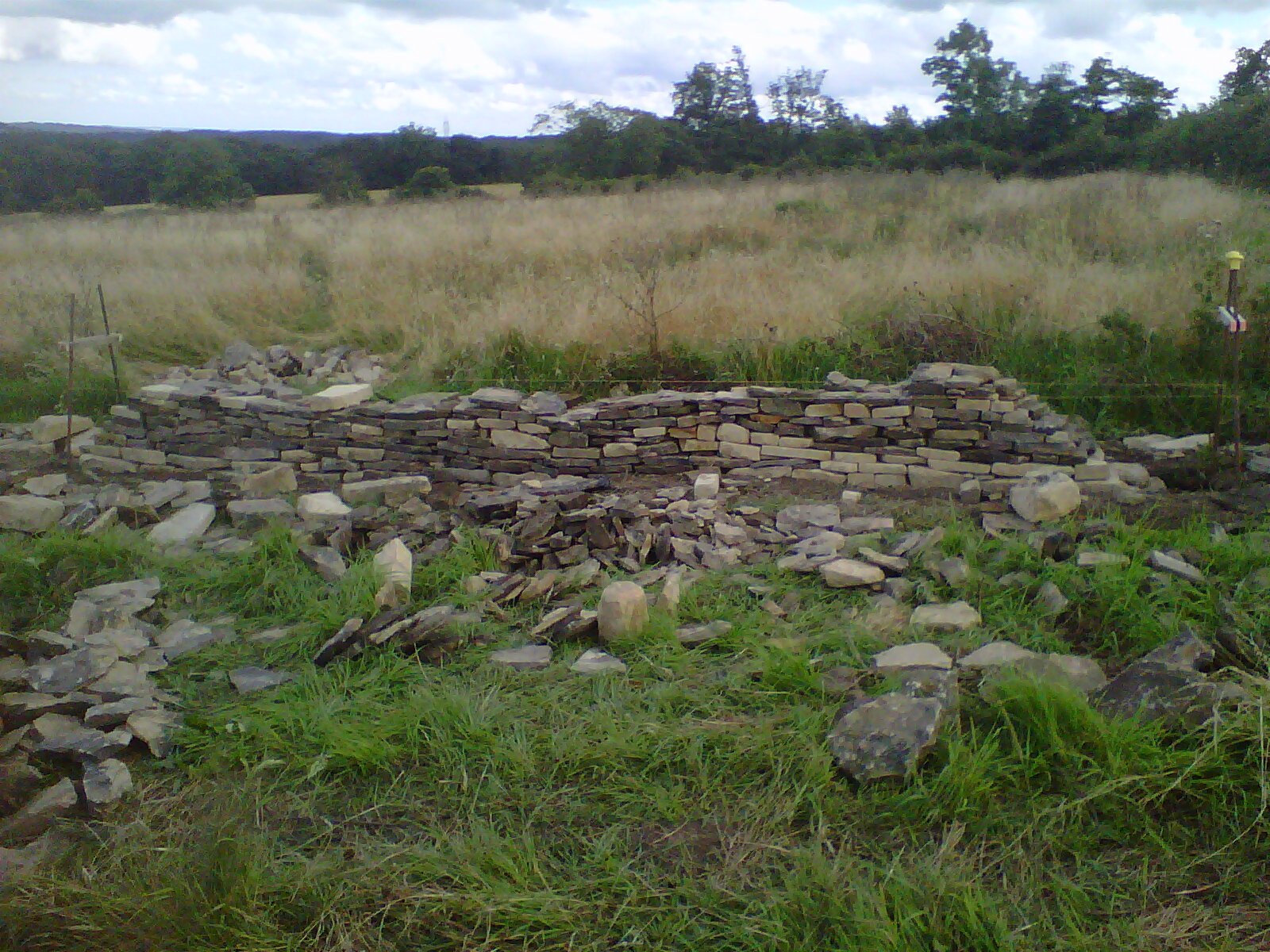
I now know how to strip a wall down, sort out new foundations and build a new wall.  It was pretty hard going and the weather was hot – I drank nearly 2 litres of water on each of the days.  I can still feel the effects of a couple of days hard labour!  However, it was good fun and I think I learnt an awful lot. If nothing else, I now have an appreciation of the amount of effort that goes into building these walls!

This is my bit of the wall – the overall wall was a group effort – I worked the bit of the right hand end of the wall.  There were 7 of us on the course with two instructors.  It is far from perfect, but not too bad for a first attempt. 

I reckon with a bit of practice it would be possible to complete about one metre of wall per day.  So how many metres of wall are there in the new property?  I reckon (using good old Google Earth) that there is around 500 metres of dry stone wall on the property – about 400 metres is in good shape requiring a little bit of repair here and there, but about 100 metres needs totally rebuilding.  I don’t have a more accurate estimate at this point, since I have had more important things to look at up until now.  Even so with a 100 metres of wall to rebuild that is potentially 100 days work – or 5 months full time.  Mmmmm.

Here’s some more photos from the weekend.   I would highly recommend the course. And all for £75.

At the end of the first day.
The group at work.

Plans of the property today

We have made some progress over the past couple of weeks.

The topographic survey was conducted a couple of weeks ago and we now the results.  It is a very accurate plan of the cottages, the outbuildings and the surrounding ground.  The surveyors installed a number of anchor points and then measured everything from these.  The end result is a very large plan of the property and the surrounding areas.

We also had a comprehensive internal survey completed.  From this, we now have an accurate layout of all the rooms, windows and even wall thicknesses.  This will be used as the basis for the plans for the new renovation.  The plans of the current building will also include the front and side elevations. 

I have both of these plans printed out on large sheets of paper, but I don’t have these electronically at the moment.  More when I have more information electronically.

Update: I now have electronic versions of the material and have uploaded them to other posts on the blog.  You will find the existing floorplans here, the topographic survey here, and the elevations here.

The results of the Bat Survey are in!

Although we are still waiting for the written report, it would appear that we don’t have a problem with bats.  The assessors have confirmed that there are no bats living in any of the buildings and while the survey did reveal bats foraging in some of the tress.  They only recorded one bat during their time (around 3 hours) on site. 

As soon as we have the written report, I will post more information.

« Older posts Newer posts »

© 2025 Hagg Leys Farm

Theme by Anders NorenUp ↑